
Money I can hold
On durability, the landlord I won't become, and what I actually own
I rent
I rent the place I live in. I pay every month for a roof that will never have my name on it, and at the end of it I will own exactly nothing. That is the normal thing, almost everyone I know does it, and there is nothing wrong with it. Plenty of people rent because there is no other option, myself included right now, and that is fine, it is just not where you want to end up. And the normal advice is to flip it around as fast as you can. Stop renting, start owning, and then own enough that other people pay rent to you. That is supposed to be the whole game.
I have thought about money for years, read a lot of it, argued with most of it, and I keep snagging on that last step.
So this is not a how to get rich post, and it is not advice. It is closer to a confession of how I think money is supposed to work, and where I have decided to stop. For me money turns out to be a moral question before it is a math question, which is the opposite of how it usually gets written about. So I want to start with the ethics and the philosophy, and only then get to what I actually own and why. You can skip around. The headings are there for that.
Durability over yield
Still standing in 2055
Here is the whole philosophy in one line. I do not try to make the most money. I try to be the hardest to knock over.
Most money writing optimizes for the biggest number per year. Best return, highest yield, beat the market. I do not care about that, or I care about it last. The question I actually ask is whether I am still standing in 2055, after whatever the next thirty years decide to throw at me. Up twenty two percent last year means nothing if the thing that produced it blows up in the one year I needed it to hold. Durability beats yield. I would rather have the boring thing that survives than the brilliant thing that might not.
The point of money is to need less of it
Luke Smith has an essay, Why It’s Bad to Have High GDP, that quietly rewired how I see this. His point is that the big number everyone chases does not measure how well off you are, it measures how much you have to run through the system just to stay alive. A family that grows its own food and fixes its own things shows up as almost nothing on that chart, because nothing is being bought. A self-sufficient life has a personal GDP of basically zero. So a high number is not a sign of wealth, a lot of the time it is a sign of fragility, of how much you depend on everything outside you continuing to work.
Turn that around and the goal flips. The point of money, in the end, is to need less of it. That is the other Luke essay, Minimizing Liabilities Is Making It, and it is the same move Jacob Lund Fisker makes in Early Retirement Extreme, go after your expenses instead of your returns, because your expenses you control and your returns you do not. This is really the other half of a thing I already wrote about getting out early.
So the real goal is not the biggest pile. It is a handful of different things that each survive a different kind of disaster, so that no single bad year takes the whole thing down. There is a fancy word for that, antifragile, but I do not want to lean on it. The plain version is the old one. Do not put all your eggs in one basket, and make sure the baskets do not all break for the same reason.
Two good options, and a bad middle
The way I have come to see it, there are only two good places to be with money, with a bad stretch in between. One is to need very little of it. Spend less, rely less on money and more on yourself, on your own skills, on barter, on the people around you. Community is a huge piece of this and it almost never gets mentioned. A person with neighbors who lend tools and trade food and show up when something breaks is wealthy in a way no account balance will ever show. That is the end I am walking toward.
The other good place is the opposite extreme, having so much money that you genuinely stop thinking about it. Some sharp people aim for exactly that, get rich enough that the question just disappears. I understand the logic and I am not going to pretend it does not work. But something about it sits wrong with me and I have a hard time naming the feeling. When money stops being any kind of constraint, life starts to look a little like a game with the cheat codes turned on, and I do not think people are at their best that way. I would rather earn my way to needing little than buy my way to not caring.
The bad place is the middle, and it is where almost everyone lives. Enough money to depend on it completely, never enough to be free of it. Running hard just to keep the machine fed. That is the spot to climb out of, in either direction, and I already know which direction I am picking.
Skills are the one true wealth
This is the thread running under both Fisker and Luke, and it might be the most important thing on this whole page. Skills are an investment, maybe the best one there is. The more genuinely useful you are, the more you are worth, and not in a resume way. When something goes wrong and you do not know how to do anything, all you have is the money you saved and the hope it still buys something. But if you can fix, build, grow, repair, and make, your worth does not vanish when the market does. Money is just worth materialized, a stand-in for things people can actually do. Skills are the thing itself. Aside from family, they are the one form of wealth nobody can inflate away or take from you, and they deserve their own post, which they will get. For now just know they sit underneath everything here.
The landlord I won’t become
Why it sticks
So, back to the renting thing, because this is the part I genuinely have not made peace with.
The classic move is simple and it works. Buy a house, rent it out, let the tenant’s rent pay down your mortgage, and at the end you own a house that somebody else paid for. Do it a few times over a couple of decades. It is one of the most reliable ways ordinary people have ever built real wealth. And I cannot get comfortable being on that side of it.
Why not. Because I am on the other side of it right now. I know exactly what it feels like to hand over money every month for something that will never be mine. I do not love the idea of being the guy collecting that. I have always felt a little weird about renting a house to someone who would rather own it, when I would rather own mine too. Is it ethics, is it values, is it just a feeling I have not argued myself out of yet? Honestly I do not know which. I am not going to pretend I have it solved.
Two ways to think about it
But I do not want to leave it at a feeling, so let me bring in the two people who thought about this much harder than I have, and who happen to disagree with each other.
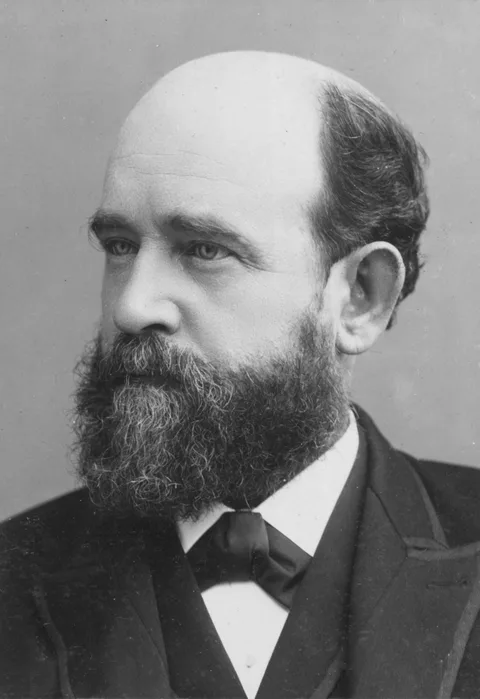
The first is Henry George, in Progress and Poverty. His argument is that land is a little different from other things you can own, because most of what makes a piece of land valuable is not anything the owner did. A neighborhood, a city, a road, other people showing up and building lives nearby, those are what make the ground worth something, and the owner just collects the rent on it. Push it to the limit, which is George’s own example, if one man owned all the land around a town he could charge whatever he liked for the right to live there, and everyone else would simply have to pay. That is not trade. That is a toll.
The second is the encyclical Rerum Novarum, which is the side I was raised closer to. It defends private property, land included, as a real and natural thing. You mix your work and your care into something and it becomes yours, and the people who want to abolish all private ownership tend to wreck the very people they say they are rescuing. But it does not stop there, and the part that sticks with me is the limit it puts on ownership. What you own, you hold as a kind of trust, not a trophy. The earth was given to everyone. The man who has more than he needs owes something to the man who has less, and the poor have a real claim on his conscience.
Those two genuinely disagree, Leo XIII wrote part of that letter to answer George directly, and I am not going to settle a fight that outlived both of them. But I notice they agree on the one thing I actually need them to agree on. Owning in a way that corners or wrecks other people is wrong, even when it is perfectly legal.
The honest versions
Now, there are honest ways to be a landlord, and I want to be fair about that, because the man who taught me the most about real estate, John Schaub, is about as far from a slumlord as a person can get.
His whole method is built to be good to the tenant. Fair rent, repairs actually done, tenants who stay for years because they are treated well, and little touches like a discount for paying on time instead of a penalty for paying late, which is the same money framed as a reward instead of a punishment. The tenant is the point, not a yield to squeeze. If you are going to do it, that is how.
And there is a version that gets rid of the landlord relationship altogether. You buy the house, then you sell it to the person living in it on long terms, so that they actually own their home and you just hold the note. You become the bank instead of the landlord. They build equity in a place that is theirs, and you still get paid for the capital you put up. If I ever did any of this, that is the only shape I would want.
Probably no
But where I have actually landed is, probably not at all.
A house I own and live in, some metal in a safe, a piece of land. That is backbone enough. I do not need a tenant to feel secure. And if the last little sliver of security that being a landlord would buy me costs me something I would feel weird about every time I thought about it, then it is too expensive. That is the honest answer. I am close to settled on it. Probably no, and if ever, then only as the bank.
A word on land
They are not making more of it
The thing underneath all of that is bigger than houses. It is land itself, and it is enough of its own subject that it is going to get its own post. So here is just the small version.
They are not making any more of it. And like George said, a lot of what land is worth is worth that because of everyone else, not because of the owner. So when someone owns far more land than they will ever use, and holds it mostly to collect what everybody else’s presence makes it worth, something is off to me. Even when it is legal. Even when, if I am honest, I would probably be tempted to do the same in their shoes. I am not a single-taxer, I have not worked out the policy, and a blog paragraph is not going to solve political economy. This is a gut thing I am still thinking through.
The village and the hut
There is an older pattern I keep coming back to, the village. For most of human history nobody carved the world into deeds the way we do now. In a village, or a tribe, the land was simply shared, it was the commons, but each family had its own hut, the home they built and lived in. That always struck me as the natural arrangement, and at first I thought it was the opposite of private property. The longer I sit with it, the more it looks like the two traditions I just described, reconciled. The hut is yours, you built it, you put your work into it, and that is exactly what Rerum Novarum protects. The land underneath is shared, because the land is the thing everyone needs and nobody made, which is exactly George’s point. Private home, common ground. Maybe that is not so different from what we have now, or maybe it is the entire difference. I am still turning it over.
Land in use
What bothers me is land held out of use. Land in use is a completely different thing.
If I owned land I was not working, the move that sits fine with me is to rent it to someone who wants to work it. Land farmed by a person who wants to farm it is land doing its job, and renting it to them is the same honest shape as selling the house to the family living in it. The problem was never owning land, or even renting it out. The problem is holding it idle as a toll on the people who would actually use it.
Now I want to be careful, because “use it or it is wasted” is too blunt and I do not actually believe it. Some land should sit untouched. Wild land, protected nature, a forest thick with animals and a tangle of life that would be wrecked the moment someone developed it, that is not idle land, that is land doing the most important job there is. Same with a piece somebody is genuinely holding for a real plan they have not gotten to yet. What I am uneasy about is narrower than unused land. It is land hoarded purely as a toll, fenced off from everyone not to protect anything or build anything, just to collect what other people’s presence makes it worth. Leaving a stretch of the earth wild on purpose is the opposite of that.
And the truth is that my real dream, the thing I would do if the money were handled, is not to be a landlord of anything. It is to be self-sufficient on my own ground. Cows, sheep, chickens, a few vegetables, and mostly fruit. I do not farm yet, not really, so I am not going to write like a homesteader when I am not one. That is a post for when I have actually put my hands in the dirt. But that is the direction I am pointed, and you can see how it lines up with everything else here. Land that feeds you has a personal GDP of almost nothing, and depends on almost no one. That is the whole idea, just made of soil instead of money.
Gold and silver
The oldest money there is
Now the part that actually sits in a safe.
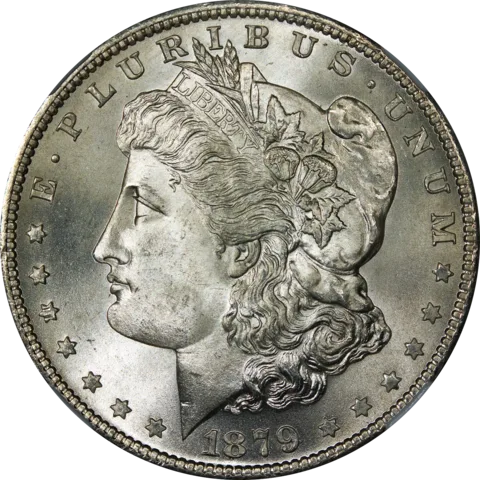
Gold and silver are the most boring money there is, and the oldest. Metal you can hold in your hand has been money for most of human history. Paper promises come and go, governments and their currencies come and go, and the metal just sits there and stays money. Roy Jastram spent an entire book, The Golden Constant, measuring exactly this across four and a half centuries of records. The finding is subtle and worth getting right. Gold is not a reliable short-term inflation hedge, in any given year it can lag badly or run ahead. But over the long run its purchasing power keeps coming back to the same stable average. It is not that gold goes up, it is that gold stays put while everything measured against it wobbles. Somebody put it perfectly once, gold is not a get-rich asset, it is a get-through asset. That is exactly how I hold it. Insurance, not a bet.
Honest money
There is a moral case too, and it is the one that actually moved me. Money you cannot print is honest money. Murray Rothbard lays out the mechanics in What Has the Government Done to Our Money?, and Jörg Guido Hülsmann puts the ethics of it plainly in The Ethics of Money Production, both free to read. The short version is that printing money is not free and it is not neutral. It quietly moves real wealth from the people holding the currency to whoever gets the new money first, before prices catch up. That is not a metaphor and it is not an accident, it is the mechanism. A slow, legal, invisible transfer that nobody votes on. Metal cannot be printed, and that is most of the appeal right there. There is only so much gold and silver in the earth’s crust, a finite amount no government and no central bank can conjure more of. The same goes for land, there is exactly as much of it as there has always been. Scarcity you cannot fake is what lets a thing hold value at all. A currency you can create without limit will, given enough time, be worth almost nothing.
Friction is a feature
Here is something people treat as a downside that I treat as the opposite. I cannot panic-sell a silver bar in San Juan in two seconds the way I can dump an ETF on my phone in the middle of a bad night. That friction is not a bug. It is the asset working as designed. It keeps me from doing the stupid thing at the bottom. The hardest part of holding anything for thirty years is not selling it in year three when you get scared, and metal you have to physically carry to a dealer makes year three easy.
Silver, the soft spot
I will be honest about one thing. I hold more silver than gold, and part of that is sentiment, not spreadsheet. Silver just has a soft spot in my heart.
There is a real case under the feeling, though. Silver has an industrial demand floor that gold does not, it was the everyday-transaction money for most of history in a way gold never really was, and you can stack it on a normal budget without ever buying a single piece that costs a paycheck. There is also the gold-silver ratio, how many ounces of silver it takes to buy one ounce of gold. Across the long sweep of history that number has sat far lower than it does today, and when it gets stretched wide, eighty or a hundred to one, it tends to narrow back toward its average eventually. It never closes all the way, and it is not a crystal ball, but it is a rough band, and plenty of people use it to decide which metal to stack, the cheaper one by the ratio. When silver is historically cheap against gold, I lean silver, and the heart and the ratio happen to agree. But I am not going to dress the feeling up as pure analysis. Gold is the senior money and I hold it too. Silver just has my heart, and I figure I am allowed one of those.
Monero
Permanent storage, not a bet
One piece of this is digital, and it is the one most people will read wrong, so let me say it plainly first. I do not treat Monero as an investment. It is permanent storage. A small thing I hold because I might need it one day, not because I think it is going to moon. Even Luke, who is the reason I hold it at all, says straight out that he has no idea whether it moons or crashes, and that the price is not why you hold it. You hold it for what it does, not what its number might do.
Glass walls
So what does it do. It is the only digital money I know of that does the one thing money is actually supposed to do, which is keep your business your business.
Here is the part almost nobody realizes about cryptocurrency, and Luke says it best in Monero Maximalism. Most of it is the opposite of private. Bitcoin and nearly all the rest run on a public ledger that anyone on earth can read, forever. Every balance, every payment, permanently visible to everybody. That is not privacy. Those are glass walls. And here is the thing, every currency in human history has been private. You do not broadcast your bank balance to the planet when you hand somebody cash, and the dollar and the euro keep that basic decency too. Most crypto just threw it away and called the bug a feature.
That is also exactly why I will never own Bitcoin. Not the price, not the drama. A ledger the whole world can read was never private money, and that is the design, not a flaw you can patch later. Monero does the bare minimum a money should do, it hides who paid, who got paid, and how much, and it does it by default for everyone. Ring signatures, stealth addresses, hidden amounts. None of it is exotic. It is just money that minds its own business. If you want the whole case laid out better than I can do it here, watch the talk Monero Means Money. I keep my stack small, I keep it myself and never on someone else’s exchange, and I hold it forever.
The permanent portfolio
The boring liquid layer
Everything up to here is the backbone, the stuff I hold forever and mostly do not touch. Then there is the part that looks like an ordinary portfolio, and I think about it the least, on purpose.
It is built on Harry Browne’s idea, the Permanent Portfolio, and it is worth spelling out instead of leaving you to guess. The classic version is four equal pieces, 25% each, and each piece is there for a different kind of economic weather. Stocks for the good years when the economy is growing. Long-term government bonds, the 25 or 30 year kind, for deflation and falling interest rates. Gold for inflation and currency trouble. And cash, meaning short-term Treasury bills, for the lean recession years when everything else is down. Whatever the world does, one of the four is built to do well while another takes the hit, and they hold each other up.
Owning them is simple. A single broad stock index fund is the first quarter, long Treasuries or a fund that holds them are the second, physical gold or a gold ETF the third, and Treasury bills or a Treasury money market the fourth. You almost never sell. The only time you touch it is to rebalance, and Browne’s rule for that is the 15/35 band. You leave the whole thing alone until one of the four grows past 35% of the total or shrinks below 15%, and only then do you sell a little of whatever got too big and top up whatever got too small, back to roughly a quarter each. After that you go back to ignoring it, which in practice might be once every few years. In my own case the gold quarter already lives in the backbone above, the metal I hold in hand, so my own liquid version just runs the other three. Craig Rowland wrote the practical book on running one well.
Boring and it holds up
I do not think of this layer as the wealth. It is structured savings. It is my bank account with a better haircut. The metal and the land and the house are the wealth. This is the liquid part that lets me not touch any of that when life happens.
And the reason it is built this way is not to win. It is to never blow up, so that you can actually hold it through a 2008 or a 2020 or a 2022 without panic-selling at the very bottom like most people do. Boring, and it holds up, which is really the whole point. The day you catch yourself checking it every morning, it has stopped doing its job, and so have you.
Buy when you can
One habit runs through every single piece of this, the gold and the silver, the land, all of it. Dollar cost averaging. You buy a little at a time, on a schedule, no matter what the price is doing.
The instinct is always the same. Gold and silver are so expensive right now, I should wait for a dip. But if you live by that instinct you will never actually do anything, or you will spend your life waiting for a bubble to pop on command, which is just gambling with extra steps. Nobody knows the future. Nobody. If you buy and it drops the next week, oh well, boohoo, you keep buying, and your average comes out fine across the years that actually matter.
I am not saying this to turn it into a spreadsheet or some investing-blog tactic. It is simpler and more important than that. You are alive right now, in this moment, and the only way any of this works is if you actually start. Buy when you can. Do not wait for the perfect time, and do not wait for anyone, me included, to tell you the moment is right. There is no perfect moment. There is just the habit, repeated, while you get on with your life.
What ties it together
Look at the whole thing and it is one idea, not seven. Durability over yield, run through everything I own. Metal that just sits there and stays money. A house I own and do not rent out. A currency I hold in case the world ever needs it. A boring middle I try hard not to think about. A dream of land that feeds me. Each one survives a different kind of bad day, and not one of them depends on me being right about next year.
And under all of it there is the other thread, the one I opened with. I will not build the pile in a way I would have to look away from. Being secure is just not worth becoming the thing I would not want done to me. It is the same line in money as everywhere else, you can do what you want right up until it would wreck somebody else, and then you stop.
And honestly, you can ignore every word of this. You can skip the metal and the Monero and all the rest, find work you genuinely love that AI cannot swallow, farming, electrical, construction, a real craft, own the home you live in, and just be happy. That might be the whole secret, and it would make this entire post unnecessary. I would not even be mad.
I rent right now. Maybe I always will feel a little weird about it. But I would rather be the guy who still feels weird about it than the guy who stopped asking the question.